
The History of Atlanta, Georgia
Introduction: The Rich and Influential History of Atlanta, Georgia
Atlanta, Georgia, is one of the most historically significant and dynamic cities in the United States. Known today as a global hub for business, transportation, culture, and civil rights, Atlanta’s journey from a small railroad town to a major metropolitan powerhouse reflects resilience, innovation, and transformation. Its history is deeply tied to transportation, economic reinvention, and social change, making Atlanta a defining city of the American South.
Located in north-central Georgia, Atlanta has long served as a crossroads—connecting people, commerce, and ideas. Over time, the city has rebuilt itself through war, economic shifts, and rapid growth, earning its reputation as a city that continually rises and reinvents itself.
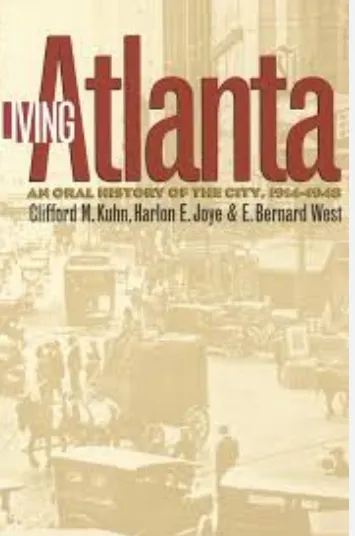
The Founding of Atlanta: A Railroad Terminus (1837–1847)
What To Do If Your Vehicle Has Hail Damage
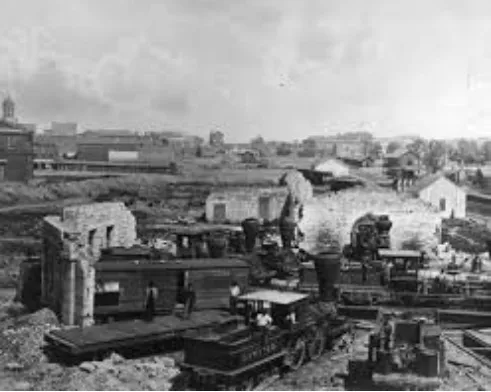
Atlanta’s origins trace back to the 1830s when it was established as the terminus of the Western & Atlantic Railroad. Originally named Terminus, the settlement was created to mark the end point of the railroad line connecting Georgia to the Midwest. Its location made it a natural center for transportation and trade.
The town was later renamed Marthasville and finally Atlanta in 1847. From the beginning, railroads shaped the city’s identity, economy, and growth. By the mid-19th century, Atlanta had become a vital transportation hub, linking multiple rail lines and fueling commerce across the Southeast.
Atlanta During the Civil War and Reconstruction
What To Do If Your Vehicle Has Hail Damage
Atlanta played a crucial role during the Civil War due to its railroad network and industrial facilities. In 1864, the city became the target of General William T. Sherman’s campaign. Much of Atlanta was destroyed during Sherman’s march, leaving the city in ruins.
Despite this devastation, Atlanta rebuilt rapidly during Reconstruction. The city embraced its identity as a center for commerce and progress, adopting the phoenix as a symbol of rebirth. This period laid the groundwork for Atlanta’s emergence as the economic and political capital of the New South.
Growth, Industry, and Education in the Late 19th and Early 20th Centuries

By the late 1800s and early 1900s, Atlanta experienced significant expansion. Railroads continued to drive industry, while manufacturing, banking, and retail flourished. The city became home to major institutions, including historically Black colleges and universities (HBCUs), such as Morehouse College, Spelman College, and Clark Atlanta University, which played a vital role in education and social advancement.
Atlanta’s population grew rapidly, attracting migrants, entrepreneurs, and professionals. Neighborhoods expanded, infrastructure improved, and the city developed a reputation as a business-friendly environment.
The Civil Rights Movement and Atlanta’s National Role
Atlanta holds a central place in the history of the Civil Rights Movement. As the birthplace of Dr. Martin Luther King Jr., the city became a hub for leadership, organizing, and activism during the mid-20th century.
Atlanta’s Black leadership, churches, and educational institutions helped shape national civil rights strategies. The city became known as “the city too busy to hate,” reflecting its relatively peaceful—though still deeply contested—approach to desegregation and social change.
The legacy of the Civil Rights Movement remains deeply embedded in Atlanta’s identity today through landmarks, museums, and ongoing civic engagement.
Transportation, Aviation, and Global Connectivity
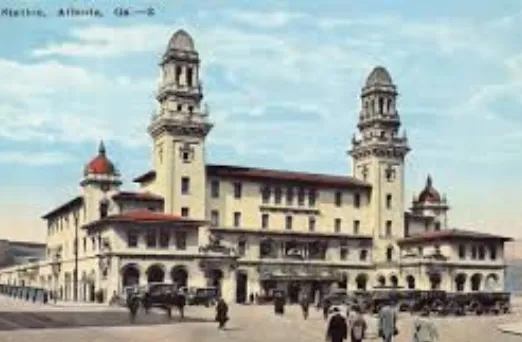
Transportation has always been at the heart of Atlanta’s success. The opening and expansion of Hartsfield-Jackson Atlanta International Airport transformed the city into a global gateway. Today, the airport is one of the busiest in the world, connecting Atlanta to international markets and driving economic growth across the region.
Atlanta’s extensive highway system, rail networks, and MARTA public transit further reinforce its role as a transportation and logistics hub for the Southeast..

Modern Atlanta: Economic Powerhouse and Cultural Center
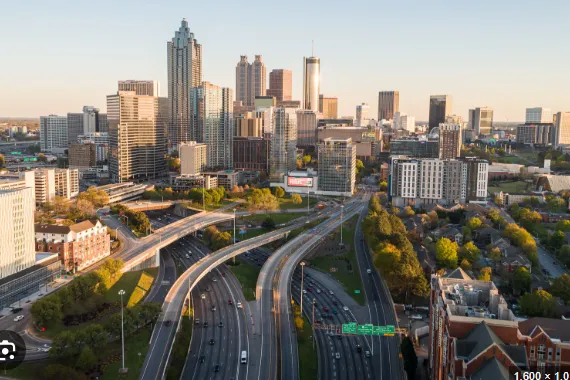
In recent decades, Atlanta has grown into a major center for corporate headquarters, technology, film and television production, healthcare, and entrepreneurship. Global companies such as Coca-Cola, Delta Air Lines, and UPS have roots in the city, while the creative economy has positioned Atlanta as a leader in music, film, and entertainment.
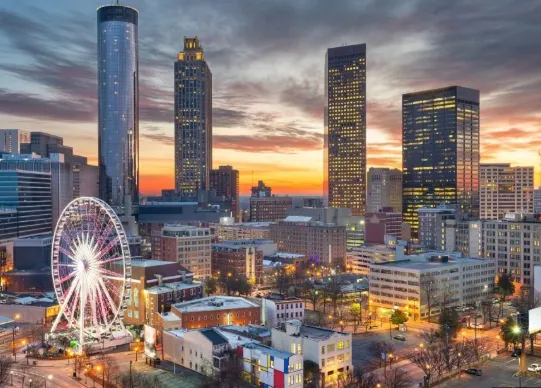
At the same time, Atlanta has invested heavily in urban redevelopment, revitalizing downtown areas, expanding green spaces like the Atlanta BeltLine, and attracting new residents from across the country and around the world.
Conclusion
Atlanta, Georgia, is a city defined by movement—of people, ideas, and progress. From its beginnings as a railroad terminus to its rise as a global city, Atlanta has continuously adapted to change while shaping the economic and cultural landscape of the nation. Though it has faced profound challenges, the city’s resilience, leadership, and innovation have fueled its growth. Today, Atlanta stands as a powerful symbol of transformation, opportunity, and enduring influence in the American South.
Questions and Answers about Atlanta, Georgia
Q. What is the history of Atlanta, Georgia?
A. Atlanta was founded in the 1830s as a railroad terminus and incorporated in 1847. It played a major role during the Civil War, rebuilt during Reconstruction, and later emerged as a leading economic, transportation, and civil rights center in the South.
Q. Why is Atlanta important to the United States?
A. Atlanta is a major transportation hub, home to one of the world’s busiest airports, and a center for business, education, culture, and civil rights leadership.
Q. How has Atlanta’s economy evolved over time?
A. Atlanta’s economy evolved from rail-based commerce to manufacturing, aviation, corporate headquarters, technology, entertainment, and global trade.
Q. What makes Atlanta’s revitalization significant?
A. Revitalization efforts focus on infrastructure, transit, green spaces, urban redevelopment, and economic diversification—strengthening Atlanta’s role as a modern, globally connected city while preserving its historical legacy.

Written By: E. Bel
Tax professional and manager with 12+ years experience in the tax industry





Up Next >
Up Next >
Monday - Friday: 10:00 AM - 7:00 PM
Saturday: 11:00 AM - 5:00 PM
Sunday: Closed





The History of Atlanta, Georgia
Introduction: The Rich and Influential History of Atlanta, Georgia
Atlanta, Georgia, is one of the most historically significant and dynamic cities in the United States. Known today as a global hub for business, transportation, culture, and civil rights, Atlanta’s journey from a small railroad town to a major metropolitan powerhouse reflects resilience, innovation, and transformation. Its history is deeply tied to transportation, economic reinvention, and social change, making Atlanta a defining city of the American South.
Located in north-central Georgia, Atlanta has long served as a crossroads—connecting people, commerce, and ideas. Over time, the city has rebuilt itself through war, economic shifts, and rapid growth, earning its reputation as a city that continually rises and reinvents itself.
The Founding of Atlanta: A Railroad Terminus (1837–1847)
Atlanta’s origins trace back to the 1830s when it was established as the terminus of the Western & Atlantic Railroad. Originally named Terminus, the settlement was created to mark the end point of the railroad line connecting Georgia to the Midwest. Its location made it a natural center for transportation and trade.
The town was later renamed Marthasville and finally Atlanta in 1847. From the beginning, railroads shaped the city’s identity, economy, and growth. By the mid-19th century, Atlanta had become a vital transportation hub, linking multiple rail lines and fueling commerce across the Southeast.
Atlanta During the Civil War and Reconstruction
Atlanta played a crucial role during the Civil War due to its railroad network and industrial facilities. In 1864, the city became the target of General William T. Sherman’s campaign. Much of Atlanta was destroyed during Sherman’s march, leaving the city in ruins.
Despite this devastation, Atlanta rebuilt rapidly during Reconstruction. The city embraced its identity as a center for commerce and progress, adopting the phoenix as a symbol of rebirth. This period laid the groundwork for Atlanta’s emergence as the economic and political capital of the New South.
Growth, Industry, and Education in the Late 19th and Early 20th Centuries
By the late 1800s and early 1900s, Atlanta experienced significant expansion. Railroads continued to drive industry, while manufacturing, banking, and retail flourished. The city became home to major institutions, including historically Black colleges and universities (HBCUs), such as Morehouse College, Spelman College, and Clark Atlanta University, which played a vital role in education and social advancement.
Atlanta’s population grew rapidly, attracting migrants, entrepreneurs, and professionals. Neighborhoods expanded, infrastructure improved, and the city developed a reputation as a business-friendly environment.
The Civil Rights Movement and Atlanta’s National Role
Atlanta holds a central place in the history of the Civil Rights Movement. As the birthplace of Dr. Martin Luther King Jr., the city became a hub for leadership, organizing, and activism during the mid-20th century.
Atlanta’s Black leadership, churches, and educational institutions helped shape national civil rights strategies. The city became known as “the city too busy to hate,” reflecting its relatively peaceful—though still deeply contested—approach to desegregation and social change.
The legacy of the Civil Rights Movement remains deeply embedded in Atlanta’s identity today through landmarks, museums, and ongoing civic engagement.
Transportation, Aviation, and Global Connectivity

Transportation has always been at the heart of Atlanta’s success. The opening and expansion of Hartsfield-Jackson Atlanta International Airport transformed the city into a global gateway. Today, the airport is one of the busiest in the world, connecting Atlanta to international markets and driving economic growth across the region.
Atlanta’s extensive highway system, rail networks, and MARTA public transit further reinforce its role as a transportation and logistics hub for the Southeast..
Modern Atlanta: Economic Powerhouse and Cultural Center
In recent decades, Atlanta has grown into a major center for corporate headquarters, technology, film and television production, healthcare, and entrepreneurship. Global companies such as Coca-Cola, Delta Air Lines, and UPS have roots in the city, while the creative economy has positioned Atlanta as a leader in music, film, and entertainment.
At the same time, Atlanta has invested heavily in urban redevelopment, revitalizing downtown areas, expanding green spaces like the Atlanta BeltLine, and attracting new residents from across the country and around the world.
Conclusion
Atlanta, Georgia, is a city defined by movement—of people, ideas, and progress. From its beginnings as a railroad terminus to its rise as a global city, Atlanta has continuously adapted to change while shaping the economic and cultural landscape of the nation. Though it has faced profound challenges, the city’s resilience, leadership, and innovation have fueled its growth. Today, Atlanta stands as a powerful symbol of transformation, opportunity, and enduring influence in the American South.
Questions and Answers about Atlanta, Georgia
Q. What is the history of Atlanta, Georgia?
A. Atlanta was founded in the 1830s as a railroad terminus and incorporated in 1847. It played a major role during the Civil War, rebuilt during Reconstruction, and later emerged as a leading economic, transportation, and civil rights center in the South.
Q. Why is Atlanta important to the United States?
A. Atlanta is a major transportation hub, home to one of the world’s busiest airports, and a center for business, education, culture, and civil rights leadership.
Q. How has Atlanta’s economy evolved over time?
A. Atlanta’s economy evolved from rail-based commerce to manufacturing, aviation, corporate headquarters, technology, entertainment, and global trade.
Q. What makes Atlanta’s revitalization significant?
A. Revitalization efforts focus on infrastructure, transit, green spaces, urban redevelopment, and economic diversification—strengthening Atlanta’s role as a modern, globally connected city while preserving its historical legacy.
Written By: E. Bel.
Tax professional and manager with 12+ years experience in the tax industry
(678) 677-2892
957 M.L.K. Jr Dr SW Suite D, Atlanta, GA 30314
Service Hours
Monday - Friday: 10:00 AM - 7:00 PM
Saturday: 11:00 AM - 5:00 PM
Sunday: Closed
Social Media